Ask the Expert: How Indigenous Science Fiction Expands the Genre
Science fiction remains an enduring touchstone of pop culture, but it’s broader than spaceships and aliens like you see in the recent “Project Hail Mary” movie — no offense, Ryan…
The Farmscapes to Forests: Kellogg Biological Station Long-Term Ecological Research Artists-in-Residence Program is entering its fifth year, featuring Kalamazoo-based visual artist Ellen VanderMyde as the 2026 Artist-in-Residence and the debut of the program’s first group exhibition showcasing the work of last year’s cohort of Michigan State University College of Arts & Letters artists.
At a time when students are encountering discussions of genocide not only in history books but as it unfolds in real time across social media and global news, a program…
Elan Pochedley, Assistant Professor of Religious Studies and 1855 Professor of Great Lakes Anishinaabe Knowledge, Spiritualities, and Cultural Practices, was awarded the Newberry Consortium in American Indian and Indigenous Studies (NCAIS) long-term faculty fellowship to research how Indigenous peoples’ expressions of environmental stewardship and governance have been practiced, sustained, interrupted, and/or rekindled throughout the central and western Great Lakes region.
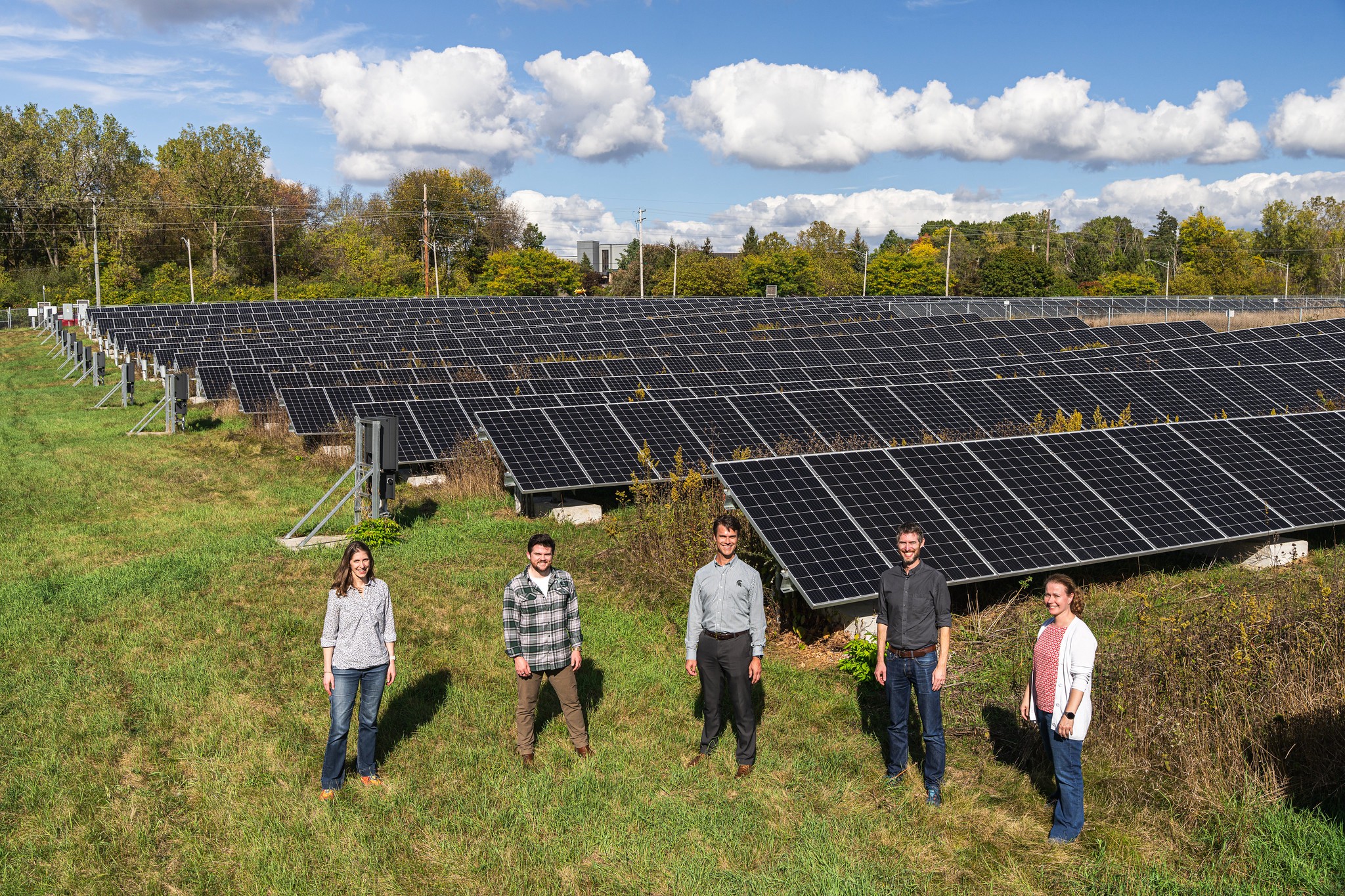
Michigan State University scientists plan to build a first-of-its-kind outdoor lab to study how solar panels placed alongside crops cloud save water, improve soil health, and support ecosystems, all while boosting farmers' bottom line and preserving farm production. The project, led by Earth and Environmental Sciences Assistant Professor Anthony Kendall, is made possible by a five-year $3.6 million National Science Foundation (NSF) grant. Gretel Van Wieren, Professor in the Department of Religious Studies at MSU, is among the senior research personnel on the project.